
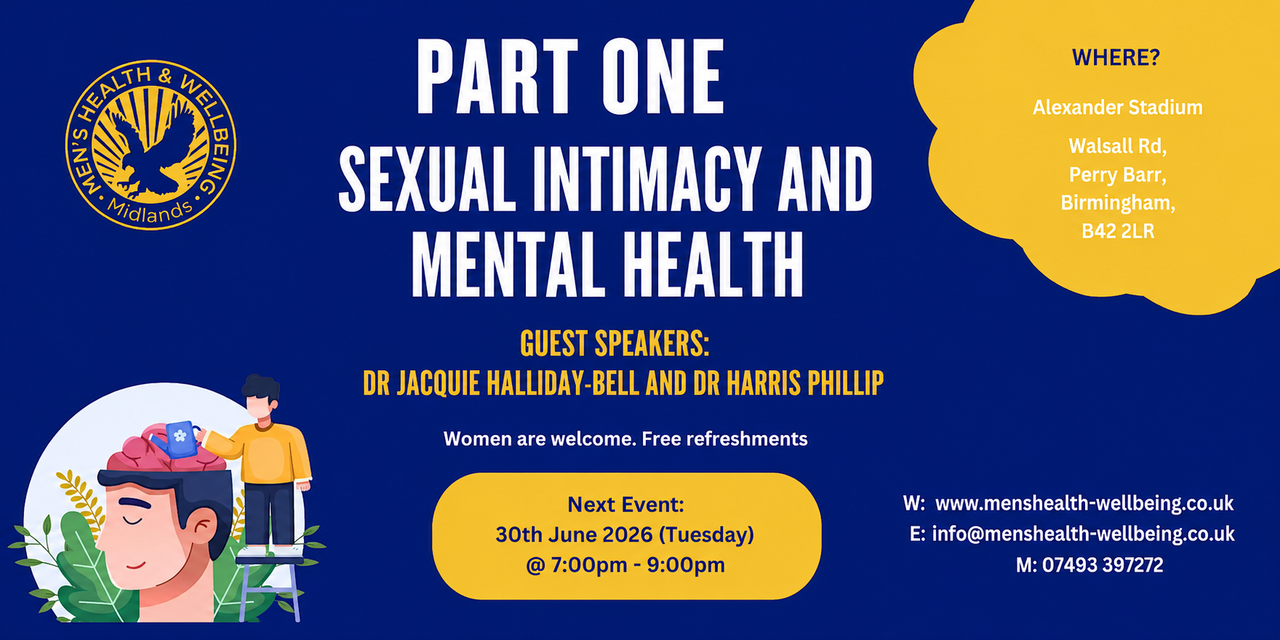
Sexual Relationships, Mental Health, and Men’s Wellbeing
Published on July 7, 2026
Sexual Relationships, Mental Health, and Men’s Wellbeing
There are some subjects people will talk around all day long, but still avoid talking about properly. Sexual relationships and mental health sit right in that space. They affect confidence, intimacy, identity, stress levels, recovery from illness, and the quality of everyday life. Yet too often they get pushed to the side, especially in conversations about men’s health.
That needs to change.
When we talk about men’s wellbeing, we cannot keep reducing it to one blood test, one diagnosis, or one appointment. It includes prostate health, mental health, stress, physical activity, emotional connection, communication, support after treatment, and the quality of our relationships.
That was the heart of the discussion. Not just illness, but how men actually live.
Why These Conversations Matter
One of the strongest messages was simple. We have to stop treating health events as one-off moments. A screening day, a GP event, a support group, a talk on intimacy, a conversation about mental health—these things only make a difference if people actually turn up, engage, and keep the momentum going.
There was a real frustration around missed opportunities. Community events have been organised with GPs, phlebotomists, transport, and on-the-spot PSA blood testing, yet turnout has not always matched the need. That matters because, for many men, the usual route through the system can feel slow, confusing, and disconnected.
When blood was taken on a Saturday and results came back by Tuesday, that showed what good access can look like. It also exposed the gap between what should happen and what often happens in practice.
The message was clear:
If services come into the community, the community has to meet them halfway.
Screening, Prostate Cancer, and Why Men Cannot Wait for Symptoms
Prostate cancer came up repeatedly, and for good reason. There is still deep concern about the lack of widespread screening for men, especially Black men, who are known to face higher risk.
One major problem is the advice men often hear:
- If you have symptoms, see your GP.
- Ask your GP if you are concerned.
That sounds reasonable until you remember a crucial point:
Many men with prostate cancer do not have symptoms.
So telling men to wait for symptoms is not good enough. It leaves too much to chance. It also assumes easy access to a GP, which many people know is not the reality.
There was also discussion about ongoing efforts around screening policy, petitions, and prostate cancer programmes such as the TRANSFORM work linked to Prostate Cancer UK. The feeling in the room was that progress is happening, but not fast enough, and certainly not with the urgency many men need.
Another important point was that screening should not be treated as a niche issue. It is:
- A men's health issue
- A public health issue
- A community issue
Stress May Be Playing a Bigger Role Than We Admit
One of the strongest reflections in the room was about stress. Not stress as a vague buzzword, but stress as a serious health factor that may be showing up in men’s lives in ways we are still not measuring properly.
The argument was not that stress explains everything. Genetics, family history, and other clinical factors still matter. But there was a clear sense that chronic pressure, life strain, and unspoken burdens may be feeding wider health problems, including prostate issues and cancer risk more broadly.
That matters because many men carry stress as if it is normal. They absorb it through:
- Work
- Finances
- Family responsibilities
- Racism
- Isolation
- The pressure to always appear strong
Then they carry on without naming it, let alone addressing it.
Prevention is not just about finding disease. It is also about understanding what keeps wearing men down.
Physical Activity Still Matters
Health is not only built in clinics. It is also built in the routines people can sustain.
Physical activity was highlighted as a key part of the wider programme. That does not mean everybody has to become an athlete. It does mean men need to be doing something regularly.
Examples mentioned included:
- Table tennis
- Cricket
- Football
- Simple general exercise
The point was not performance. The point was movement, connection, and health. A lot of men will join in for the social side first, then slowly start taking their health more seriously.
That is still progress.
Support After Diagnosis Is Just as Important as Diagnosis Itself
A huge issue raised was what happens after treatment, particularly after prostate cancer treatment. Men are often told about surgery, tests, and treatment plans, but not always prepared properly for what comes next.
One of the biggest examples is erectile dysfunction after prostate treatment. Some men do not fully understand the sexual side effects before surgery. Others know in theory, but are still unprepared for the emotional impact once it becomes real.
That can affect:
- Confidence
- Relationships
- Mental health
- Sense of identity
- Willingness to seek support
This is why support groups matter. Men need spaces where these realities can be discussed honestly, not whispered about after the fact.
A local support group was highlighted that meets monthly at the Legacy Centre, with upcoming discussions including urology aids and erectile dysfunction support. That kind of practical follow-up is not an extra.
It is part of care.
Stop Assuming One Community Fits All
Another challenge that came up forcefully was how men are approached. Too often, outreach aimed at Black men falls into lazy stereotypes.
If every plan for engagement assumes dominoes, one kind of church setting, or one narrow version of Black identity, then many men will be missed.
Black communities are not one thing. Outreach has to reflect that.
That means going into:
- Churches
- Mosques
- Different cultural spaces
- Different social circles
- Different age groups and lifestyles
Men from African, Caribbean, and other backgrounds may share some risks, but they do not all live the same lives or respond to the same messages.
If support is serious, it has to be culturally aware without becoming lazy or tokenistic.